
A checklist people can actually use.
Build an inspection checklist around decisions and evidence, with clear questions and a manageable scope.
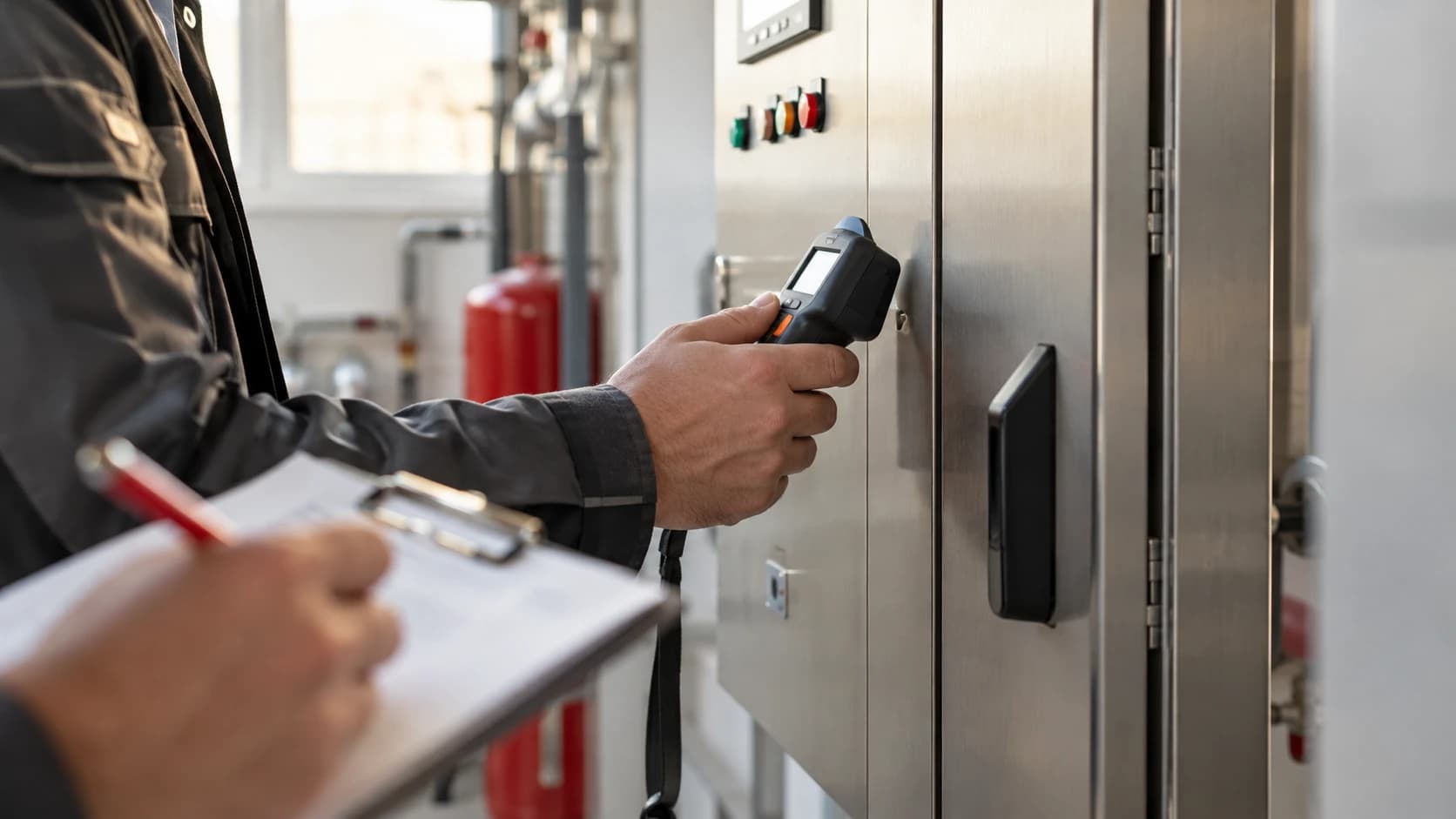
Give the checklist one job
A checklist should support a specific task. A routine site check, an installation handover, and a fault investigation have different purposes. Combining them into one universal form can make the important questions harder to find.
Write one sentence explaining what the check is meant to establish. Use that sentence to decide what belongs in the checklist and what should be handled as separate work.
Ask questions that produce usable answers
Choose the answer format to match the information. Use a choice when the result belongs to a small set of outcomes. Use a number when the measurement matters. Use text for an explanation and a photo when a visual record helps the reviewer.
Avoid vague prompts such as “Everything okay?” A more specific question tells the person what to observe and gives the reviewer something interpretable. Where your process has a threshold or requirement, define it with the people responsible for that work.
Make exceptions easy to explain
The most useful part of a routine check is often the exception. Leave a clear place for a note and supporting evidence when something needs attention. Agree on how that finding becomes assigned follow-up work.
Keep observations distinct from decisions. “The cover is cracked” records a finding. “Replace the cover before the next visit” assigns an action. Your process should make clear who can make that decision.
Keep every occurrence independent
A repeating task should create a fresh record of the work. Reusing yesterday’s answers may save a few clicks, but it can make it difficult to tell what was actually checked today.
In ACT, checklist answers and per-asset results belong to the work item. Repeating work keeps its own results so one visit does not overwrite another. Review the checklist itself periodically, separately from reviewing each completed task.
Test it where the work happens
Open the checklist on the device your team will use. Read it in the order the work happens. Check whether the required photos are practical and whether long text fields are doing the job of a simpler question.
After a pilot, remove questions that nobody uses and clarify the ones that caused confusion. Your team remains responsible for the safety, quality, and regulatory requirements of its work; a checklist tool helps record the process you define.
Explore the ACT work flow or join the early-access waitlist.